**France’s Barnier Consults on New Government, Promises No Right-Wing Shift**
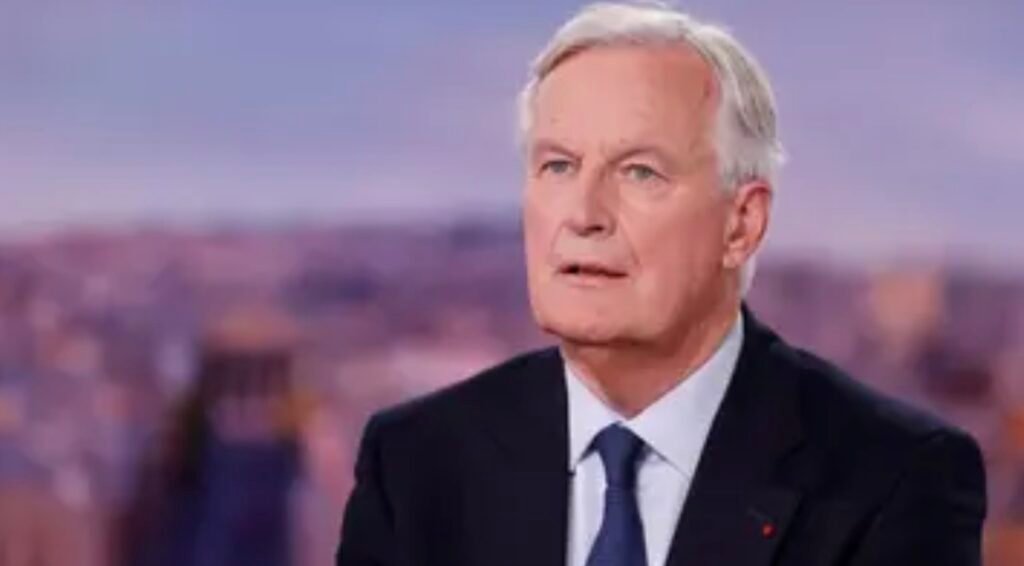
French Prime Minister Michel Barnier began consultations on Friday to form his new government, meeting with his predecessor and leaders from his right-wing party who have outlined their conditions for participating. Barnier has pledged to implement “changes and a break.”
Laurent Wauquiez, leader of Barnier’s party “Les Républicains” (Right) in the National Assembly, stated, “We want to get France out of the impasse, and we said we would take responsibility, but only under a program that addresses the concerns of the French,” including “revaluing work,” addressing “public finances,” immigration, and security.
Barnier’s predecessor, Gabriel Attal, confirmed that deputies from the presidential party (Centre) are “open to agreements with other political forces” and do not wish to obstruct or provide unconditional support.
French President Emmanuel Macron has tasked Barnier with forming a “broad government serving the country.” The 73-year-old former European Commissioner is aware that he must find the necessary balances to avoid falling to the first vote of no confidence in the fragmented National Assembly.
Barnier, in his initial remarks, stated that “we must listen carefully” and “respect all political forces” represented in Parliament, including the “National Rally” (Far Right) that topped the results in the European elections last June.
On Friday, Barnier announced that the new government would not be limited to right-wing figures and would include members from the centrist stream associated with President Macron. In his first interview after being appointed on Thursday, Barnier indicated that his government, lacking a clear majority in the suspended parliament, would also welcome members from the left. “We need to open the door… to all who wish to participate,” Barnier added.
Barnier emphasized that “education will remain a government priority,” along with other areas such as “access to public services,” “daily security,” “control of immigration,” as well as work and purchasing power, promising “changes and a break.”
The new Prime Minister will not be able to rely on the left. Olivier Faure, General Secretary of the Socialist Party, confirmed that “there will be no Socialist figures in his government; I have no doubt about that,” stating that the left will propose a vote of no confidence and condemn the “denial of democracy” concerning the legislative election results.
As for the far right, the “National Rally” will also not participate in the government but will not vote for a vote of no confidence unless the Prime Minister “deviates from his promises” on purchasing power, immigration, and security, according to the party’s Vice President, Sébastien Chenu.
This stance has led the left to accuse the far right of becoming the “kingmaker.” Left-wing Prime Minister candidate Lucie Casté said that Emmanuel Macron “places himself in coexistence with the National Rally.”
Barnier can count on members of the previous presidential majority. Former Prime Minister Édouard Philippe, who will meet Barnier on Sunday, said that “many will help him” from this group. Barnier will also meet former Prime Minister Élisabeth Borne on Saturday. However, this approach is not ideal for embodying the “break” Barnier has spoken about.
Barnier has discussed difficult choices with a desire to “tell the truth” about “financial and environmental debt.” France’s debt stands at 110% of GDP, with a public deficit estimated at about 5.5% of GDP, while the European Stability Pact sets a limit of 3% for the deficit and 60% of GDP for debt for each member state.
His appointment ends 60 days of anticipation following the early legislative elections in July, which resulted in a divided National Assembly with three blocs: left, center-right, and far-right. The elections were called after Macron dissolved the Assembly following his party’s defeat in the European elections, which were won by the far right in early June.
With his extensive experience in France and Brussels, Michel Barnier is known as a seasoned negotiator and has previously held several ministerial posts, notably during the presidencies of Jacques Chirac and Nicolas Sarkozy. He will need to employ all his diplomatic skills to form a government capable of resolving the most serious political crisis of the Fifth Republic, established by the 1958 Constitution.
By/radwa sherif ✏️✏️📚