
—
**U.S. Concerned About the Libyan Central Bank, Tripoli Reassures: “We Trust the Dollar”**
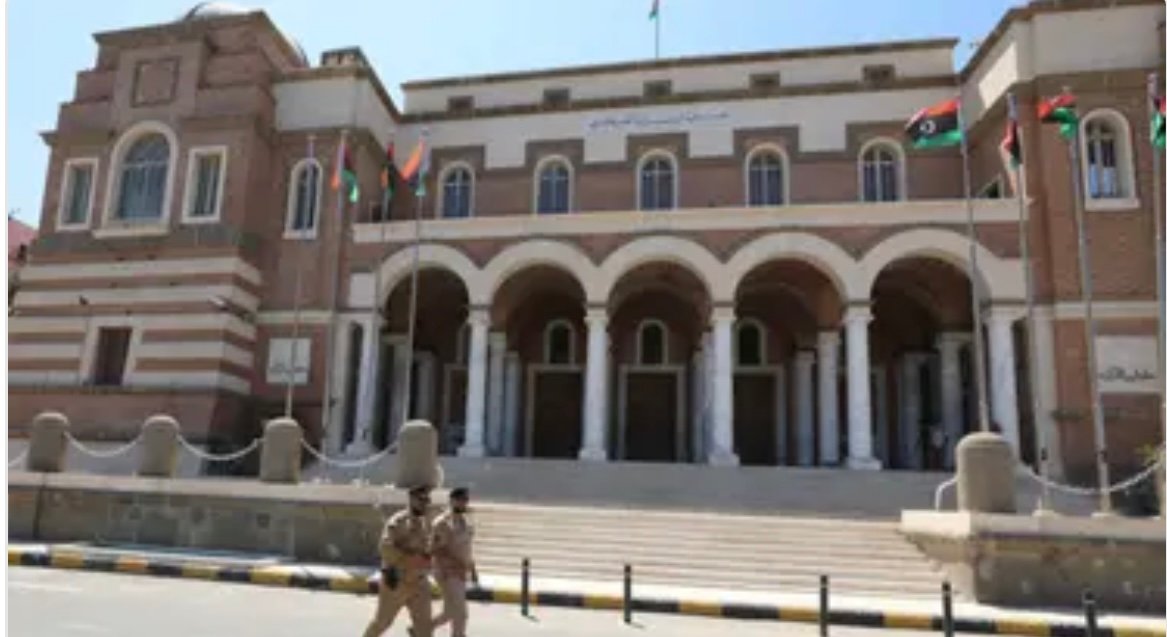
After the Central Bank of Libya became the focal point of a significant political crisis in the country—leading last week to the suspension of most oil production and the escape of the bank’s governor, Sadiq al-Kabir, abroad—the United States has now intervened in the crisis.
**Concern for “the Well-Being of Libyan Families”**
The U.S. State Department expressed its concern over the disruptions with international banks, which could harm the Libyan economy and the well-being of Libyan families due to recent events.
However, the Government of National Unity’s counterpart reassured the U.S., as the Libyan Foreign Ministry expressed its understanding of the American position regarding the Central Bank, even considering it a positive step. The ministry affirmed its continued confidence in the U.S. dollar and American institutions, particularly in light of the current challenges and power struggles in Africa.
The ministry’s statement also acknowledged the concerns about smear campaigns and lies targeting Libyan state institutions, emphasizing agreement that these concerns will be resolved, and unity will be restored behind the national institution.
The U.S. State Department had previously clarified in a statement that the uncertainty caused by unilateral actions has, in some cases, led to the suspension of financial transactions until there is more clarity regarding the legitimate leadership of the Central Bank.
The statement stressed that unilateral actions have also prompted American and international banks to reassess their relationships with the Central Bank.
The State Department reiterated its concern over the disruptions with international banks, which could harm the Libyan economy and the well-being of Libyan families.
**A Major Crisis**
It is noteworthy that the Central Bank Governor of Libya, Sadiq al-Kabir, who controls oil revenues estimated in billions of dollars, along with other senior bank officials, announced that they were forced to flee the country “to protect their lives” from potential attacks by armed militias.
This development came after the government in eastern Libya announced the suspension of oil production, most of which is located in areas under the control of the Libyan National Army led by Khalifa Haftar.
Meanwhile, most banking services across the country ceased as the crisis escalated, disrupting the operations of the Central Bank.
Libya has been living under two rival governments, one in the east and the other in the west, as the country remains mired in chaos since the NATO-backed uprising in 2011 that ousted Muammar Gaddafi.
–by/radwa sherif ✏️✏️📚